Marine vs. bovine collagen: what changes on the label?
The source tells you where the collagen came from. It doesn’t tell you the full formula, the amount in a serving, or which result a product will deliver.
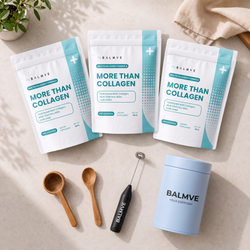
Want both sources in one formula?
More Than Collagen lists bovine and marine peptides together. See the facts panel and available product options.
Source, type and preparation are three different details
Bovine collagen comes from cattle. Marine collagen comes from marine animals, often fish. The exact source can vary by product, so read the ingredient list instead of relying on the front label alone.
Collagen type is a separate label detail. More Than Collagen lists bovine peptides Types I and III, marine Type I peptides, and undenatured Type II. That tells you the sources and types named on our label. It does not give a separate milligram amount for each source within the blend.
Preparation matters too. “Peptides” refers to collagen broken into smaller chains. “Undenatured Type II” identifies a different collagen preparation. The words answer different questions. They aren’t interchangeable shorthand for a product’s results.
Compare marine and bovine collagen by what the label can prove
| Label detail | What it tells you | What it doesn’t tell you |
|---|---|---|
| Marine source | The collagen came from a marine animal. Check the product label for the named source. | That it is vegan, fish-free, or automatically better absorbed. |
| Bovine source | The collagen came from cattle. The listed collagen types still matter. | That every bovine product has the same types, amount or preparation. |
| Collagen type | Which collagen types the manufacturer lists, such as I, II or III. | The source or amount unless those details also appear. |
| Serving amount | The listed amount in the stated serving size. | The amount of each component inside a blend unless the label separates them. |
Research reviews describe collagen extraction from several animal sources, including cattle and marine sources. Processing and source can affect the material’s properties. That doesn’t establish a universal winner for people choosing an oral supplement. Avoid buying on claims like “smaller marine peptides absorb better” unless the exact product and claim have evidence behind them.
If you avoid a source for dietary, religious or personal reasons, check the full ingredient and sourcing information. Fish is a major food allergen under US FDA labeling rules. Anyone with an allergy should check the product’s actual allergen statement and ask the manufacturer if anything remains unclear.
What our label lists
More Than Collagen combines bovine collagen peptides Types I and III with marine Type I peptides. It also lists undenatured Type II separately, along with vitamin C, D3, K2 and a proprietary blend.
The label does not disclose separate bovine and marine amounts. We won’t invent a ratio. The product page’s supplement-facts image shows the full panel.

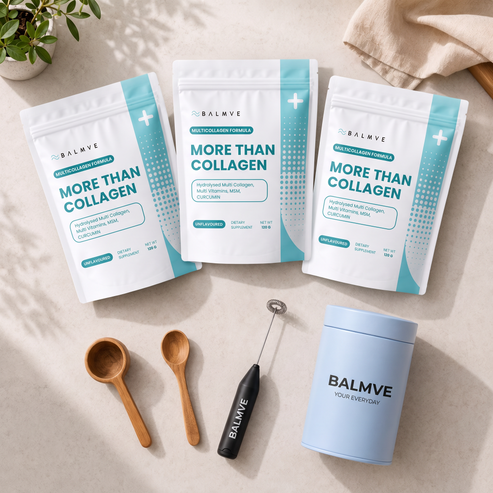
Choose by the full formula
See the ingredients, current offers and buying options for More Than Collagen.
View product optionsBalmve publishes this guide and sells the product discussed here.
Common questions
Is marine collagen automatically better than bovine?
No. Source alone doesn’t establish a better result. Compare the type, preparation, amount and evidence for the specific product.
Can a product contain both?
Yes. More Than Collagen’s label lists bovine and marine peptides in the same multi-collagen blend.
Does marine collagen mean the product is vegetarian?
No. Marine collagen comes from an animal source. It isn’t vegan or vegetarian.
Sources
- León-López et al., Hydrolyzed Collagen: Sources and Applications.
- Shaik et al., review of marine collagen processing and properties.
- US Food and Drug Administration, major food allergens.
This is a Balmve brand guide, not an independent review. It provides general product information, not medical advice.